



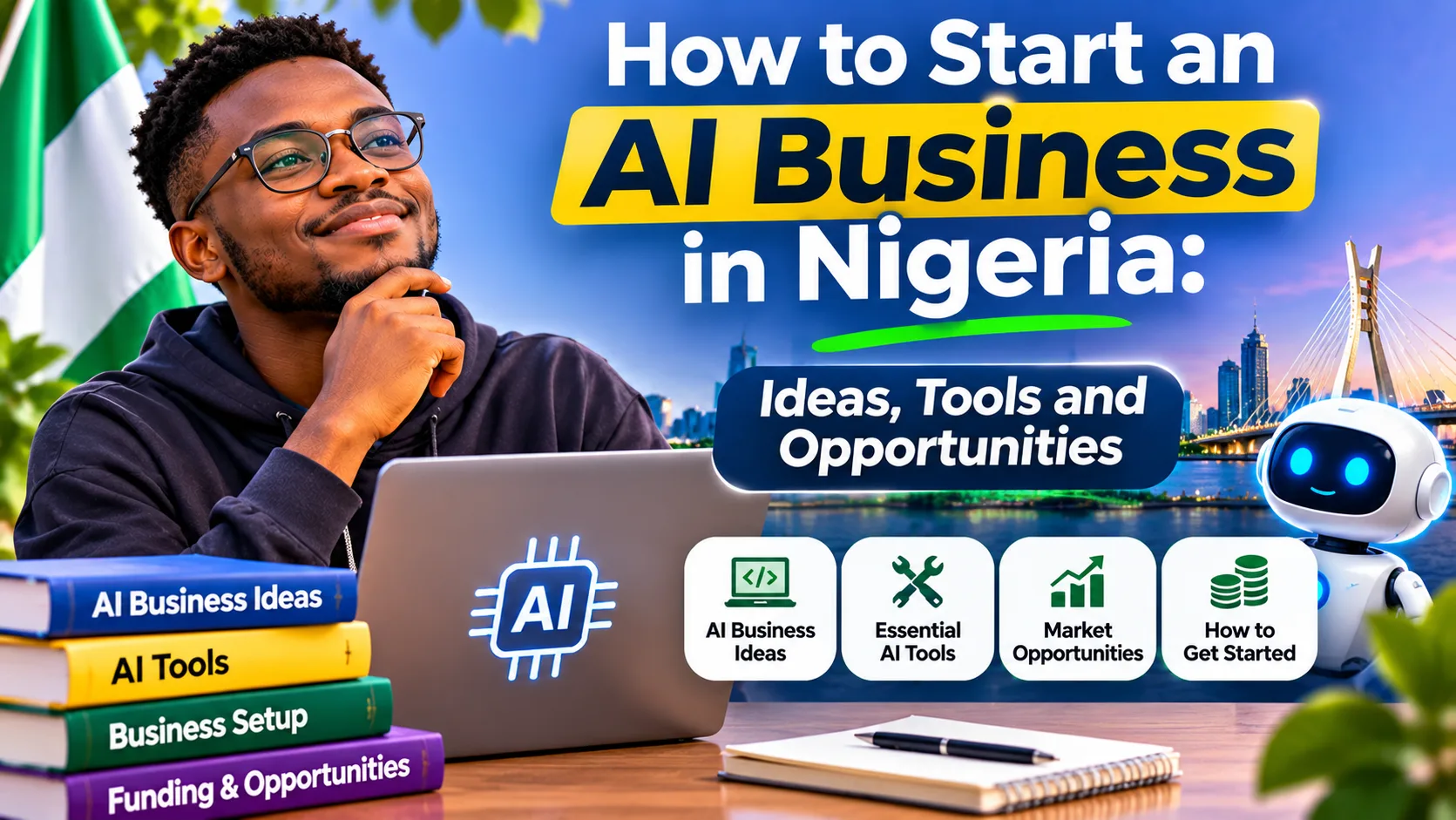
Artificial intelligence is creating new business opportunities around the world, and Nigerian entrepreneurs are beginning to explore how they can turn the technology into income.
You do not necessarily need to be a software engineer, own a technology company or have millions of naira in startup capital to enter the AI industry. With the right tools and a clear business idea, you can start a small AI-powered service business, help existing companies automate their operations or develop a product that solves a problem in the Nigerian market.
For example, a small business owner may need help responding to hundreds of WhatsApp enquiries, a school may want to automate administrative tasks, and an online retailer may need assistance creating product descriptions and marketing materials.
These are problems that AI-powered services can help address.
However, starting an AI business is not simply about learning how to use ChatGPT or another AI application. The real opportunity is understanding what people need, finding a practical way to solve that problem and convincing customers to pay for the solution.
This guide explains how to start an AI business in Nigeria, business ideas worth considering, tools you can use, how to find customers and what you should know before launching.
Is an AI Business Profitable in Nigeria?
An AI business can be profitable in Nigeria, but its success depends on the problem being solved, the quality of the service, customer demand and how well the business is managed.
Many Nigerian businesses already use digital platforms to communicate with customers, advertise products, receive payments and manage orders. However, some still handle important processes manually.
For example, a business may have employees responding to the same customer questions throughout the day, manually entering orders into spreadsheets or creating marketing content from scratch.
An AI-powered service could help reduce some of that workload.
The opportunity is not necessarily to build a new AI model. You can use existing AI technology to help businesses work more efficiently.
There is also evidence that Nigerian small businesses need support with deeper digital adoption. A 2026 digital transformation blueprint published for SMEDAN found that although many MSMEs use social media and digital payments, adoption of operational tools such as accounting, inventory and e-commerce systems remains relatively low. <Link ref="turn302193search1" title="Read the SMEDAN digital transformation blueprint"/>.
This creates room for businesses that can help organisations adopt useful technology without making the process complicated or expensive.
10 AI Business Ideas You Can Start in Nigeria
You do not have to pursue every opportunity. Start with one business idea that matches your skills, available resources and the needs of customers you can reach.
Here are ten ideas worth exploring.
1. AI Automation Agency
An AI automation agency helps businesses reduce repetitive tasks using artificial intelligence and automation software.
For example, you could help a real estate company automate its customer enquiries, organise incoming leads, send appointment reminders and notify sales representatives when a potential customer needs attention.
You could also build automation systems for:
Online stores.
Schools and training centres.
Recruitment agencies.
Real estate companies.
Hotels and hospitality businesses.
Professional service providers.
Imagine a customer sending a WhatsApp message to a property company asking about available apartments. Instead of an employee manually answering every question, an automated assistant could provide basic information, collect the customer's requirements and direct serious enquiries to a sales representative.
How you make money: Charge a setup fee for implementing the automation and a recurring monthly fee for maintenance, monitoring and improvements.
Tools to explore: n8n, Make, Zapier, OpenAI API, Google Gemini API and approved messaging integrations.
This is a particularly interesting business for people who enjoy solving operational problems.
2. AI-Powered Customer Support Services
Many Nigerian businesses receive customer enquiries through WhatsApp, Instagram, Facebook and their websites.
Managing these messages can become difficult as the business grows.
You can build AI-powered customer support systems that help businesses answer frequently asked questions, provide product information, collect customer details and route complicated enquiries to human agents.
For example, an online fashion store could use an AI assistant to answer questions about:
Available products.
Prices and product sizes.
Delivery locations.
Payment instructions.
Return policies.
Order status.
The system should be connected to reliable business information so that it does not invent prices, availability or delivery promises.
How you make money: Offer chatbot development, setup, integration and ongoing support.
Potential customers: Online retailers, travel agencies, schools, hotels, restaurants and service businesses.
3. AI Content and Digital Marketing Agency
Businesses need content to attract customers, but many small companies do not have dedicated marketing teams.
An AI-assisted marketing agency can help them produce and manage:
Social media content.
Marketing captions.
Email campaigns.
Product descriptions.
Blog articles.
Advertising concepts.
Promotional videos.
Content calendars.
AI can help speed up research, drafting and production, but the service should include human editing, fact-checking, brand understanding and creative direction.
Simply generating generic posts with an AI tool is unlikely to create a sustainable business. Customers are paying for marketing that helps their businesses communicate better and attract customers.
How you make money: Charge monthly retainers, project fees or packages based on the volume and type of content delivered.
Tools to explore: ChatGPT, Gemini, Canva, CapCut and other design or video-editing applications.
4. AI-Powered Educational Platform
Education is another area where AI can create useful opportunities.
You could develop a platform that helps Nigerian students understand difficult subjects, practise examination questions or receive personalised explanations.
Possible products include:
AI-powered mathematics tutors.
English language learning assistants.
JAMB and WAEC revision tools.
Personalised study planners.
Educational chatbots.
Interactive learning applications.
For example, a student could ask a question about a mathematics problem and receive a step-by-step explanation rather than just the final answer.
You could also explore tools that support learning in Nigerian languages.
The important thing is to make sure the educational content is accurate and suitable for the student's level. For younger users, appropriate privacy and safeguarding measures are also essential.
How you make money: Subscription plans, school licensing, paid learning packages or institutional partnerships.
For graduates and young Nigerians interested in developing the technical skills needed to work in artificial intelligence, postgraduate education can also be worth considering. There are several international funding opportunities available to eligible Nigerian students. You can explore our guide to fully funded master's scholarships for Nigerians to discover opportunities for studying abroad.
5. AI Business Assistant for Small Businesses
Many small business owners do not need complicated software. They need practical help managing everyday activities.
You could build an AI-powered business assistant that helps entrepreneurs:
Draft customer responses.
Prepare quotations and invoices.
Organise customer enquiries.
Summarise sales records.
Generate product descriptions.
Prepare business reports.
Create marketing materials.
Track basic business tasks.
For example, a small catering business could use the assistant to prepare quotations based on customer requirements, draft responses to enquiries and organise event bookings.
You could begin by providing this as a service before developing a standalone software product.
How you make money: Monthly subscriptions, business packages or customised installations.
6. AI-Powered Recruitment and CV Services
Job seekers regularly need help preparing CVs, writing cover letters and improving their applications.
You could create a service that uses AI to help people:
Improve their CV structure.
Tailor applications to specific job descriptions.
Prepare professional cover letters.
Practise interview questions.
Identify missing skills.
Organise job applications.
You could also build a recruitment support product for employers that helps organise applications and summarise candidate information.
However, employers should not rely on AI alone to make hiring decisions. Candidate assessments need human oversight and fair evaluation.
How you make money: Charge for CV reviews, application packages, interview preparation or subscriptions to a job-search platform.
7. AI-Powered Local Language Services
This is an opportunity that deserves more attention in Nigeria.
Many AI applications are designed primarily around widely used international languages. There is room to develop products that make digital services more accessible to people who communicate in Yoruba, Hausa, Igbo and other Nigerian languages.
Possible business ideas include:
Voice-based customer support.
Local-language educational assistants.
Translation and transcription services.
Voice-to-text applications.
Local-language content tools.
AI assistants for community organisations.
Nigeria's National Centre for Artificial Intelligence and Robotics (NCAIR) has introduced N-ATLAS, a Nigerian open-source multilingual and multimodal language model. Its initial language support includes Yoruba, Hausa, Igbo and Nigerian-accented English. <Link ref="turn302193search0" title="Explore NCAIR and N-ATLAS"/>.
Developers can explore whether its capabilities are suitable for building local-language applications.
How you make money: Sell software subscriptions, offer translation and transcription services, develop customised solutions or partner with organisations that need local-language technology.
8. AI-Powered E-commerce Services
Online stores need more than attractive websites. They need efficient product management, customer communication and marketing.
You could provide AI-powered services to help online retailers:
Generate product descriptions.
Organise product catalogues.
Create promotional images and videos.
Respond to common customer questions.
Recommend products.
Analyse customer feedback.
Prepare marketing campaigns.
For example, a retailer selling hundreds of products could use an AI-assisted system to organise product information and create consistent descriptions for its website.
How you make money: Charge for catalogue setup, monthly management, automation or software subscriptions.
9. AI Data and Research Services
Businesses often have information but lack the time or expertise to analyse it.
An AI-assisted research business can help organisations organise information and turn it into useful reports.
Services could include:
Customer feedback analysis.
Market research.
Competitor monitoring.
Survey analysis.
Document summarisation.
Business reporting.
Data cleaning and organisation.
For example, a company that receives hundreds of customer reviews could pay you to organise the feedback, identify recurring complaints and prepare a report highlighting areas that need improvement.
AI can speed up the analysis, but important findings should be checked against the underlying data.
How you make money: Charge per research project, report or monthly business intelligence package.
10. Build a Niche AI Software Product
If you have technical skills or can work with a developer, you can build an AI-powered software product for a specific market.
Instead of developing a general AI assistant that competes with major technology companies, focus on a problem that existing tools do not solve particularly well for your target customers.
Possible products include:
AI assistants for Nigerian real estate agents.
AI-powered school administration tools.
AI customer support for online stores.
AI-powered bookkeeping assistants.
AI tools for travel agencies.
AI-powered document processing systems.
Voice assistants for local-language services.
A niche product can be easier to explain and market because customers understand exactly what problem it solves.
How you make money: Monthly subscriptions, annual licences, usage-based pricing or enterprise contracts.
Which AI Business Should You Start With?
Not every idea requires the same level of technical skill or startup capital.
The table below provides a practical comparison.
| AI business | Technical difficulty | Potential customers |
|---|---|---|
| AI content agency | Low | SMEs, brands and creators |
| CV and recruitment services | Low | Job seekers and employers |
| AI marketing services | Low–Medium | Retailers and service businesses |
| AI research services | Medium | Businesses and organisations |
| Customer support automation | Medium | Online stores and service companies |
| AI business assistant | Medium | Small businesses |
| AI education platform | Medium–High | Students and schools |
| Local-language AI tools | High | Schools, organisations and developers |
| Niche AI software | High | Businesses in a specific industry |
These are relative assessments, not guarantees of profitability or the amount of capital required.
My recommendation for beginners
If you have limited capital and are just entering the industry, consider starting with one of these:
AI automation services: Help businesses automate repetitive tasks.
AI marketing services: Help businesses create and manage better marketing content.
AI customer support: Build systems that handle routine customer enquiries.
AI-powered CV services: Help job seekers improve their applications.
These businesses can be tested with existing tools before you invest in developing your own software.
If you have programming experience, consider building a niche software product instead.
Best AI Tools to Start a Business in Nigeria
You do not need to develop your own AI model before starting an AI business.
Several existing tools provide capabilities that entrepreneurs can use to build services and products.
Here are some worth exploring.
1. ChatGPT
ChatGPT can assist with research, writing, brainstorming, coding, document analysis and business planning.
You can use it to develop marketing content, prepare customer communication templates, create business proposals and explore software ideas.
For a service business, it can help you deliver work more efficiently, provided you review the output before sending it to customers.
2. Google Gemini
Gemini can assist with writing, research, document analysis, coding and other AI-powered tasks.
Developers can also explore the Gemini API through Google AI Studio to integrate AI capabilities into their applications.
Google provides a free tier with limitations, alongside paid usage options for production applications. Check the current pricing before building a business around a particular model. <Link ref="turn144489search0" title="View Gemini API pricing"/>.
3. Canva
Canva helps entrepreneurs create marketing designs, presentations, social media graphics and promotional materials.
Its AI-powered features can support content production and design workflows.
This is useful if you want to offer marketing services to businesses without building a design application from scratch.
4. n8n
n8n is a workflow automation platform that allows you to connect different applications and automate processes.
For example, you could create a workflow that:
Receives a new customer enquiry.
Extracts relevant information.
Organises the enquiry in a spreadsheet or CRM.
Sends an acknowledgement.
Notifies a sales representative.
You can combine n8n with AI APIs to build more advanced automation systems.
5. Make
Make is another automation platform that allows you to connect applications and build automated workflows.
It can be useful for businesses that want to connect forms, email, spreadsheets, customer management tools and AI services without developing every integration from scratch.
6. OpenAI API
The OpenAI API allows developers to integrate AI models into their own software products.
For example, you could use an API to build a customer support assistant, document processing system or AI-powered business application.
One important distinction: ChatGPT subscriptions and API usage are separate. If you are developing an application, you should budget for API usage independently. <Link ref="turn144489search5" title="Check OpenAI API pricing"/>.
7. Meta Llama
Meta's Llama family provides models developers can explore for building AI-powered applications.
Depending on the model and its applicable licence, developers may be able to use, customise or deploy models for commercial projects.
Always review the licence terms for the specific model before using or distributing it in a commercial product. <Link ref="turn144489search12" title="Read Meta's Llama licence information"/>.
8. N-ATLAS
N-ATLAS is particularly relevant to developers interested in Nigerian languages and local applications.
Its initial language support includes Yoruba, Hausa, Igbo and Nigerian-accented English.
Potential applications include local-language education tools, voice-based services and customer support systems.
Review the model's documentation, availability and usage terms before choosing it for a commercial product.
How Much Does It Cost to Start an AI Business in Nigeria?
There is no single amount required to start an AI business.
Your startup cost depends on whether you are selling a service using existing tools, developing software or building a more complex AI application.
For example, someone offering AI-assisted content services can start with an existing computer, internet access and suitable software.
A developer building a subscription-based AI platform will need to consider additional expenses, including hosting, API usage, software development, security and customer support.
Here are the main expenses to plan for:
| Expense | What it covers |
|---|---|
| Computer and internet | Equipment, data and connectivity |
| AI tools | Subscriptions or API usage |
| Website | Domain, hosting and development |
| Business registration | Applicable CAC registration costs |
| Marketing | Advertising, outreach and sales |
| Software development | Building and maintaining the product |
| Customer support | Handling enquiries and technical issues |
You do not need to pay for every available AI subscription when starting.
A better approach is to identify the tools required for your first service, test the business with a small number of customers and upgrade as demand grows.
Can You Start an AI Business Without Coding?
Yes.
You can start several AI-related businesses without writing code.
For example, you can use existing tools to provide:
AI-assisted marketing services.
CV writing and review.
Social media content management.
Business research.
AI-assisted video production.
Basic workflow automation using no-code platforms.
However, if you want to build a custom AI application, integrate multiple systems or develop a software product, programming knowledge or a technical development partner may become necessary.
You should also understand the tools you are selling. Being able to generate an answer from an AI application is different from knowing how to deliver a reliable business service.
How to Start an AI Business in Nigeria Step by Step
Once you have selected an idea, avoid spending months building something before confirming that people actually need it.
Use the following steps to get started.
Step 1: Identify a Problem Worth Solving
Start with a problem, not a tool.
Ask yourself:
What tasks do businesses perform repeatedly?
What problems do customers complain about?
Where do businesses waste time?
Which processes are expensive or difficult to manage?
What can AI make faster, easier or more affordable?
For example, rather than saying you want to build an AI chatbot, identify a group of businesses that struggle to respond to customer enquiries.
That gives you a clear customer and a reason to develop the solution.
Step 2: Choose a Specific Target Market
Do not try to serve every business in Nigeria immediately.
Choose a market you understand or can reach.
You could focus on:
Real estate companies in Lagos.
Online retailers.
Private schools.
Recruitment agencies.
Hotels and travel businesses.
Professional service providers.
Small businesses operating through WhatsApp and Instagram.
A focused business is often easier to market because you can develop a service around the specific needs of one customer group.
Step 3: Research Your Competitors
Find out whether other businesses are already offering similar services.
Look at:
What they provide.
Who they serve.
How they charge.
What customers complain about.
What their services fail to address.
Competition does not necessarily mean you should abandon an idea.
It may indicate that customers already understand the problem and are willing to pay for solutions.
Your opportunity could be to provide better support, specialise in a particular industry or make the service more accessible to Nigerian businesses.
Step 4: Learn the Tools You Need
You do not need to master every AI platform.
Choose two or three tools that directly support your business idea.
For example, someone starting an automation agency could begin with n8n, an AI API and a spreadsheet or CRM platform.
Someone starting an AI marketing agency might focus on ChatGPT, Canva and a video-editing application.
Learn how to use the tools properly, including their limitations, pricing and data-handling requirements.
Step 5: Build a Demonstration
Before approaching customers, create something that demonstrates what your service can do.
If you want to sell customer support automation, build a simple demonstration for a fictional online store.
Show how the assistant responds to questions about products, delivery and orders.
If you want to sell AI marketing services, create sample campaigns for a real business category.
A demonstration gives potential customers something concrete to evaluate.
Step 6: Find Your First Customers
Your first customers may come from your existing network.
Reach out to business owners, entrepreneurs and professionals who may benefit from your service.
You can also use:
LinkedIn.
Instagram.
Facebook business communities.
WhatsApp business networks.
Direct email outreach.
Local business associations.
Technology and entrepreneurship events.
Avoid sending generic messages claiming that you can transform a business with AI.
Explain the specific problem you can solve.
For example:
"Hello, I noticed your business receives customer enquiries through WhatsApp. I help businesses automate routine enquiries so customers can get answers faster while your team focuses on more important conversations. I would be happy to show you a short demonstration."
A simple, relevant message is often more effective than an exaggerated sales pitch.
Step 7: Charge for the Value You Deliver
Do not price your service based only on how many hours you spend using AI.
Consider the value the customer receives.
For example, an automation system that reduces repetitive customer support work may be worth more to a business than a one-off collection of AI-generated social media captions.
You can use different pricing structures:
One-time setup fee: The customer pays for building and implementing the solution.
Monthly retainer: The customer pays for maintenance, monitoring, updates and support.
Subscription: Customers pay regularly to use your software.
Project fee: You charge for a specific deliverable, such as a marketing campaign or research report.
Your pricing should account for software costs, API usage, development time, customer support and profit.
Step 8: Register and Organise Your Business
If you are operating a business in Nigeria, consider the appropriate business structure and registration requirements.
The Corporate Affairs Commission provides an online process for registering business names and companies.
You can begin by reviewing the official CAC registration information:
The appropriate registration route depends on your business structure and circumstances. Check the current requirements and fees before applying.
You should also organise your business records, customer agreements, invoices and payment arrangements.
Step 9: Protect Customer Information
AI businesses may handle sensitive information, including customer names, phone numbers, email addresses, financial records and business documents.
You should understand how the tools you use collect, store and process information.
The Nigeria Data Protection Act 2023 establishes rules for processing personal data and applies to relevant processing activities involving Nigerian individuals and organisations. <Link ref="turn302193search37" title="Read the Nigeria Data Protection Act 2023"/>.
Practical steps include:
Collect only the information you need.
Explain how customer information will be used.
Avoid uploading confidential customer records to AI services without appropriate authorisation and safeguards.
Use suitable access controls.
Protect passwords and API keys.
Review the data-handling terms of third-party AI providers.
Delete information when it is no longer required, subject to applicable obligations.
If your business processes personal data, assess its obligations under the law and seek professional advice where necessary.
Step 10: Improve Your Service and Expand
Once you have your first customers, pay attention to their feedback.
Find out what works, what causes problems and what additional features they need.
Improve your service before spending heavily on advertising or hiring a large team.
You can eventually expand by:
Serving more businesses in the same industry.
Developing a software product from a repeated service.
Hiring additional specialists.
Offering more automation services.
Creating subscription packages.
Partnering with technology providers.
The objective is to build a business that solves a repeatable problem, not one that depends entirely on your personal availability.
Where Are the Biggest AI Opportunities in Nigeria?
Nigeria's AI opportunity is not limited to content creation and chatbots.
The country's National Artificial Intelligence Strategy identifies economic growth, social development and technological advancement as important objectives. Its 2025 strategy also highlights foundational infrastructure, ecosystem development, sector adoption, responsible AI and governance. <Link ref="turn144489search85" title="Read Nigeria's National Artificial Intelligence Strategy"/>.
Several sectors are particularly worth exploring.
Agriculture
AI applications could help farmers and agricultural businesses with crop monitoring, agricultural information, market intelligence and disease identification.
For example, a mobile application could allow farmers to submit crop photographs and receive preliminary information about possible plant diseases.
Such tools need proper testing and should not replace qualified agricultural advice where decisions have serious consequences.
Education
AI-powered learning assistants, examination preparation tools and personalised educational platforms could help students access learning support.
Products that understand Nigerian curricula and local learning needs may have a useful market.
Healthcare
Potential applications include appointment management, administrative automation, medical document organisation and patient communication.
Healthcare products require particular care because inaccurate AI output can cause harm. Clinical diagnosis and treatment decisions should remain under qualified medical supervision.
Financial Services
AI can support customer service, financial education, document processing and operational automation.
However, products involved in lending decisions, payments, insurance or other regulated financial activities may require additional approvals and compliance arrangements.
Retail and E-commerce
Online retailers can use AI to improve customer support, product discovery, marketing and inventory-related workflows.
This may be an accessible starting point for entrepreneurs who already understand online selling.
Local Language Technology
Voice assistants, translation tools, transcription systems and local-language educational products could help make digital services more accessible.
N-ATLAS and other local AI research initiatives make this an area worth watching for Nigerian developers.
Government and Ecosystem Opportunities for AI Entrepreneurs
You do not necessarily have to build your AI business entirely on your own.
Nigeria has institutions and programmes focused on technology development, innovation and entrepreneurship.
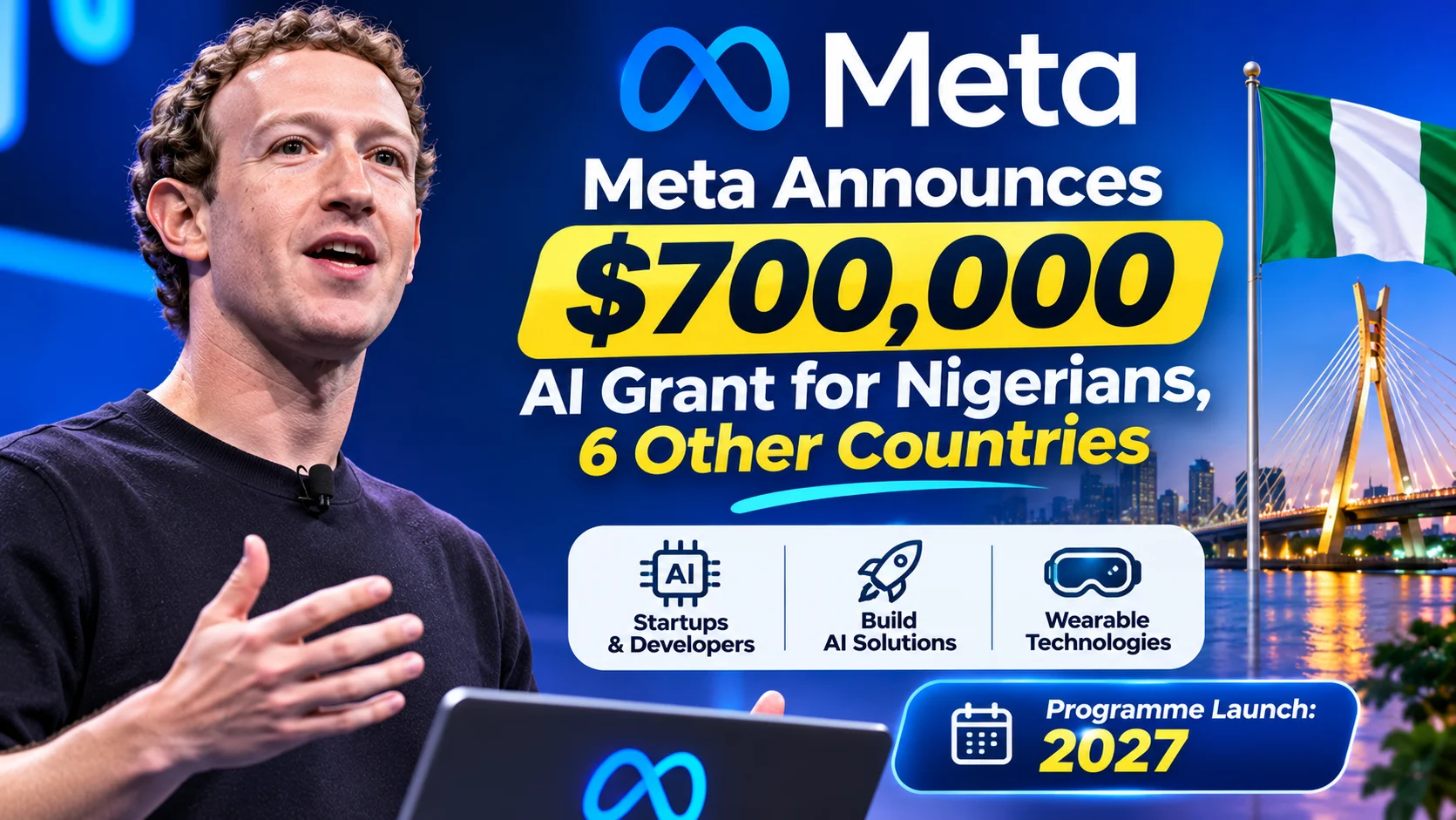
Another opportunity Nigerian entrepreneurs should watch is Meta's AI grant for Nigerian startups, a $700,000 regional funding initiative covering Nigeria and six other countries. The programme is expected to begin in 2027 and is intended to support startups and developers building solutions with Meta's AI technologies and wearable devices. Although the application requirements have not yet been announced, interested founders can start preparing their projects and monitoring official updates.
National Centre for Artificial Intelligence and Robotics (NCAIR)
NCAIR is a government technology centre focused on AI, robotics and other emerging technologies.
Its work includes research, development, collaboration and the practical adoption of AI in Nigeria.
Website: https://ncair.nitda.gov.ng/
Nigeria's National AI Innovation Challenge
The National AI Innovation Challenge is an initiative focused on building practical solutions using N-ATLAS.
The 2026 challenge invited developers to build working solutions integrated with the model, with areas including developer tools, voice-first applications and sector-specific solutions.
The published 2026 application window ran from September 22 to October 12, 2026, and has closed. Interested developers should monitor NCAIR for future opportunities rather than assume that the 2026 application remains open.
Website: https://ncair.nitda.gov.ng/naic/
Startup Support and Engagement Portal
Nigeria's Startup Support and Engagement Portal provides information and services connected with the Nigeria Startup Act.
It includes startup labelling, ecosystem support and information about incentives and financing initiatives.
Not every small AI business automatically qualifies for startup labelling or the benefits associated with the Act. Review the eligibility requirements before applying.
Website: https://www.startup.gov.ng/
Common Mistakes to Avoid When Starting an AI Business
AI can make it easier to start experimenting with business ideas, but there are mistakes that can make an otherwise promising business difficult to sustain.
1. Starting Without a Clear Customer
Do not build an AI application simply because you find the technology interesting.
Identify who will use it and why they would pay for it.
2. Depending Entirely on AI-Generated Work
AI tools can produce incorrect information, generic content and misleading answers.
Always review important outputs, especially when dealing with customers, business records, education, finance or healthcare.
3. Spending Too Much on Software
You do not need every premium AI subscription when starting.
Use the minimum tools required to test your idea and increase spending when customer demand justifies it.
4. Building Before Validating Demand
A sophisticated application does not guarantee customers.
Speak to potential buyers, demonstrate a simple version and find out whether they are willing to pay before investing heavily in development.
5. Ignoring Data Privacy and Security
Customer trust is essential.
Do not collect unnecessary personal information or expose confidential business data to tools without understanding how that information is handled.
6. Promising Results You Cannot Guarantee
Avoid marketing claims such as guaranteed sales, automatic business growth or completely error-free AI systems.
Explain what your product can actually do and be transparent about its limitations.
1. Can I start an AI business in Nigeria without coding?
Yes. You can start an AI-assisted marketing agency, CV service, research business or content service using existing tools. No-code platforms can also help you build basic automation workflows. More advanced software products may require programming skills or a technical partner.
2. What is the best AI business to start in Nigeria?
There is no single best option for everyone. AI automation, customer support, marketing services, educational applications and niche software products are worth exploring. The right choice depends on your skills, target customers and the problem you can solve.
3. How much money do I need to start an AI business in Nigeria?
The cost depends on the business model. A service business can start with an existing computer, internet access and a few essential tools. A custom AI software product requires additional investment in development, hosting, API usage, testing and maintenance.
4. Can I make money using ChatGPT in Nigeria?
Yes. You can use ChatGPT as part of a business that provides writing, research, marketing, customer communication, automation planning and other services. However, customers pay for useful results and professional delivery, not simply for access to ChatGPT.
5. Do I need to develop my own AI model?
No. Many businesses use existing AI models through applications and APIs. Developing or training your own model may become relevant if your product requires specialised capabilities, greater control or a particular deployment arrangement.
6. Can I build an AI business using only my smartphone?
You can start learning AI tools and providing some basic services using a smartphone. However, a laptop or desktop computer will make it much easier to build automation workflows, manage customers, develop software and handle larger projects.
7. Is AI business a good opportunity for students in Nigeria?
It can be. Students can explore AI-assisted content services, educational tools, research support, digital marketing and simple automation services. Starting with a small project can help them develop practical skills and understand customer needs.
8. Can I build an AI business for Nigerian customers and earn in dollars?
Yes, it is possible to serve international customers remotely. You will need a service that meets their requirements, a clear way to demonstrate your value, reliable delivery and appropriate international payment arrangements. Earning in dollars is not guaranteed simply because your business uses AI.
Final Thoughts
Starting an AI business in Nigeria does not have to begin with a complicated application or a large investment.
You can start by identifying a problem that businesses or individuals already experience, finding an AI tool that can help solve it and offering that solution as a service.
If you are a beginner, consider AI marketing, customer support or simple business automation. If you have technical skills, explore niche software products, local-language applications and industry-specific AI solutions.
Nigeria's developing AI ecosystem also presents opportunities for entrepreneurs who want to build products that address local needs rather than simply copy existing international applications.
The most important thing is to start with a real problem, test whether customers are willing to pay for a solution and improve your product based on what you learn.
AI is the technology. The business opportunity is in what you use it to solve.


Discussion
No comments yet
Be the first to share your thoughts or ask a question about this guide.
Report Comment
Help our editorial moderation team keep discussions constructive and factual.